If you exported food products to Saudi Arabia in 2023, forget that playbook. The SFDA Halal Center changed the regulatory landscape significantly for 2024–2025.
Last month, a Dubai dates brand got held at Jeddah Islamic Port. They had perfect bilingual packaging in Arabic and English. But they were missing one critical document: a Certificate of Consignment for Halal Products issued by an SFDA-recognized Halal Certification Body (HCB). The outcome? 12 tons of cargo were rejected and returned.
This is not an isolated event. Since the Saudi Food and Drug Authority (SFDA) established the Halal Center as the sole regulatory authority, consignment rejections across Jeddah, Dammam, and Riyadh ports are up by 40% (based on our client audit data). At AHS Nexus, our compliance team audits 50+ GCC food and consumer goods exporters every month. Here is the verified, 7-document compliance checklist that SFDA demands today for smooth 2025 KSA market entry:
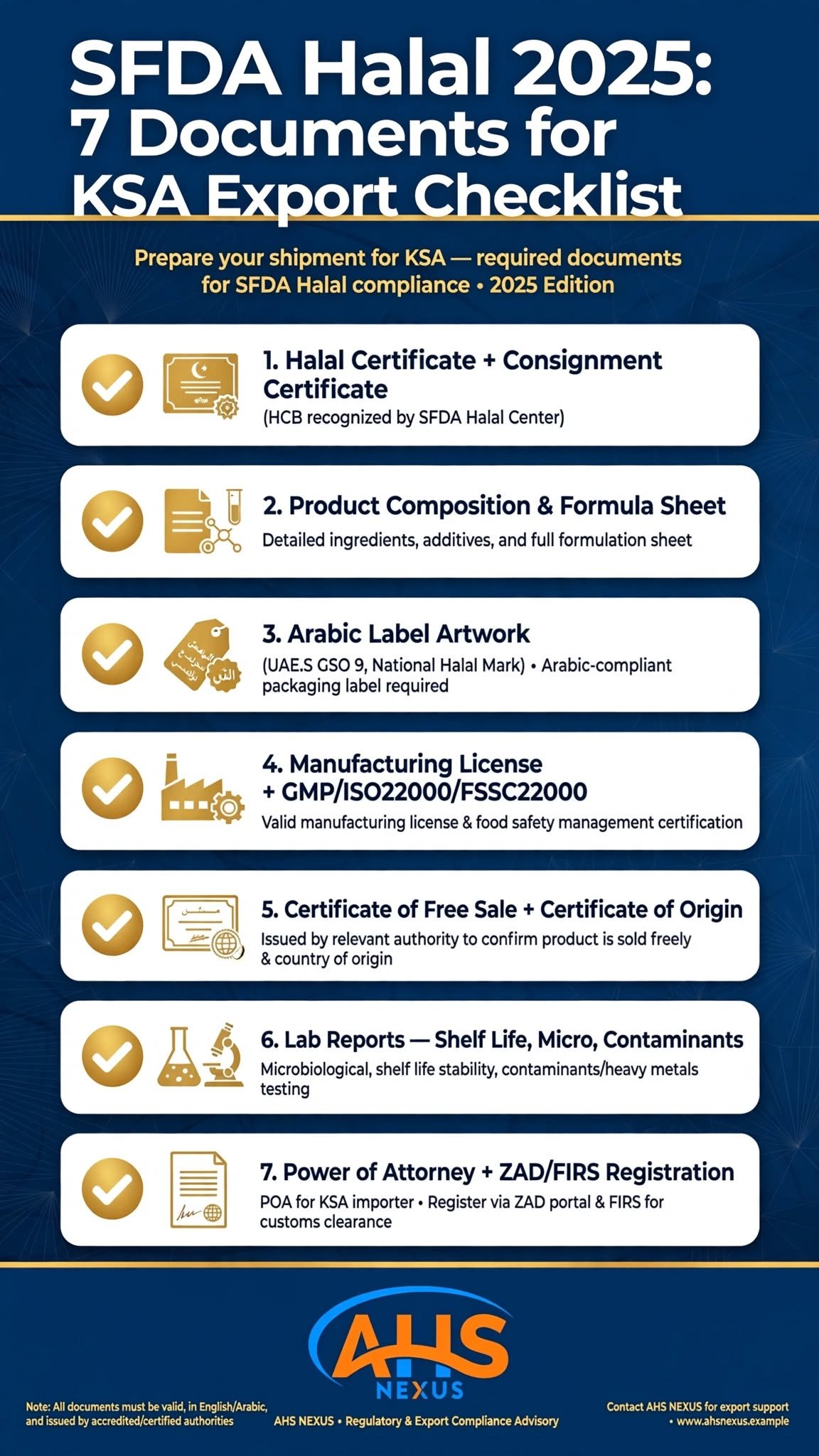
The Verified 7-Document SFDA Halal Checklist
- Halal Certificate + Consignment Certificate (They Are Not the Same!) Your product may already carry an institutional Halal certificate from Pakistan, India, or Europe, but Saudi customs mandates an essential second layer: a Shipment/Consignment Certificate issued specifically for each batch by an HCB officially recognized by the Halal Center - SFDA. For all meat products and processed ingredients falling under SFDA.FD 150-1 and GSO 150-2, this is non-negotiable. Always verify your certification body against the official SFDA recognized list before dispatch.
- Detailed Product Composition & Formula Sheet A simple list of ingredients is no longer sufficient. The SFDA rigorously scrutinizes animal-derived enzymes, gelatin sources, processing aids, and emulsifiers against GSO 993 benchmarks. If your formulation includes common emulsifiers like E471, you must explicitly declare and substantiate whether it originates from plant or animal sources.
- Bilingual Label Artwork — Arabic Primary Mandatory standards under UAE.S GSO 9 and UAE.S OIC SMIIC 1 apply across regional shipping hubs. Arabic must be the primary language on the display panel, with English as secondary. Products must bear the recognized National Halal Mark. A frequent violation we observe is displaying the Malaysian JAKIM mark alone; while respected, it is not an automatic substitute for local GCC accreditation marks.
- Valid Manufacturing License + GMP / ISO 22000 / FSSC 22000 The SFDA demands an active industrial manufacturing license along with verified Good Manufacturing Practice (GMP) or food safety documentation. Holding accredited FSSC 22000 or ISO 22000 audit certificates significantly streamlines clearance.
- Certificate of Free Sale (CFS) + Certificate of Origin Both certificates must be formally attested and legalized by the relevant Chamber of Commerce. For shelf-stable packaged foods, spices, juices, and instant noodles, these are mandatory statutory submissions under official exporter guidelines.
- Accredited Laboratory Test Reports (Within 12 Months) Historical test results are immediately flagged. The SFDA accepts only third-party accredited laboratory testing conducted within the last 12 months, detailing microbiological safety, heavy metal contaminants, and validated shelf-life testing.
- Power of Attorney + ZAD / FIRS Portal Registration If utilizing an authorized local representative or distributor inside the Kingdom of Saudi Arabia (KSA), a legal Power of Attorney (POA) is mandatory. Furthermore, products must be registered in the Saudi FIRS system, as well as the UAE’s ZAD food registration portal under MOCCAE for transshipments. (Note: ESMA is now unified under the Ministry of Industry and Advanced Technology — MoIAT).
What Changed in OIC/SMIIC 1:2019 vs 2011? The current international reference framework for the Islamic economy is OIC/SMIIC 1:2019. Unlike the outdated 2011 edition, OIC/SMIIC 1:2019 removes references to poultry stunning while allowing reversible electrical stunning parameters for select species under strict controls. Regional regulatory frameworks—including GSO 2055-1 (GCC), UAE.S 2055-1 (United Arab Emirates), and PS 3733:2022 (Pakistan)—derive directly from this standard. If your operational Halal manuals still cite the 2011 standard, update them immediately to prevent non-compliance flags during factory audits.
How AHS Nexus Accelerates Your Market Clearance At AHS Nexus, we bridge complex regulatory clauses with real-world supply chain execution. To help exporters navigate this landscape:
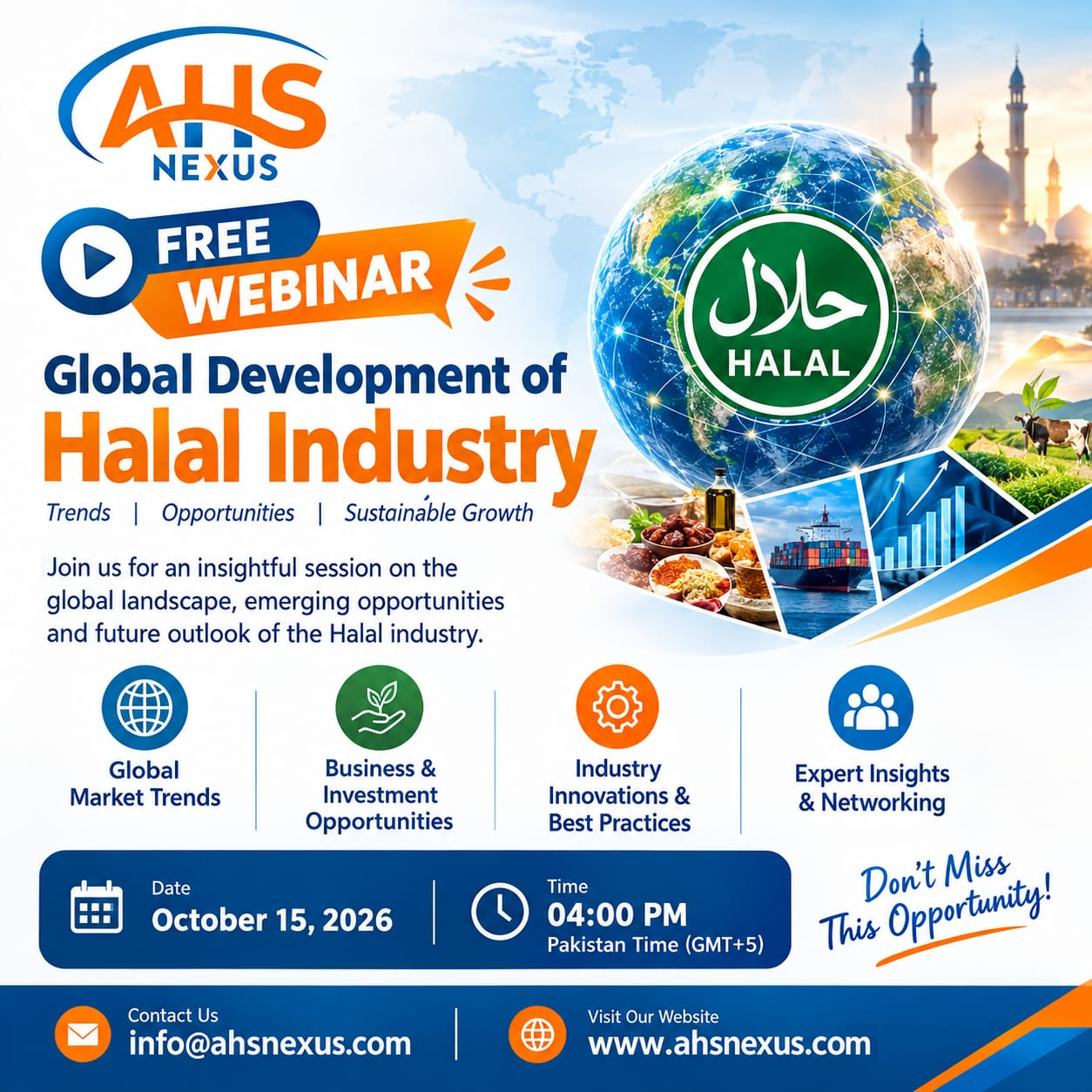
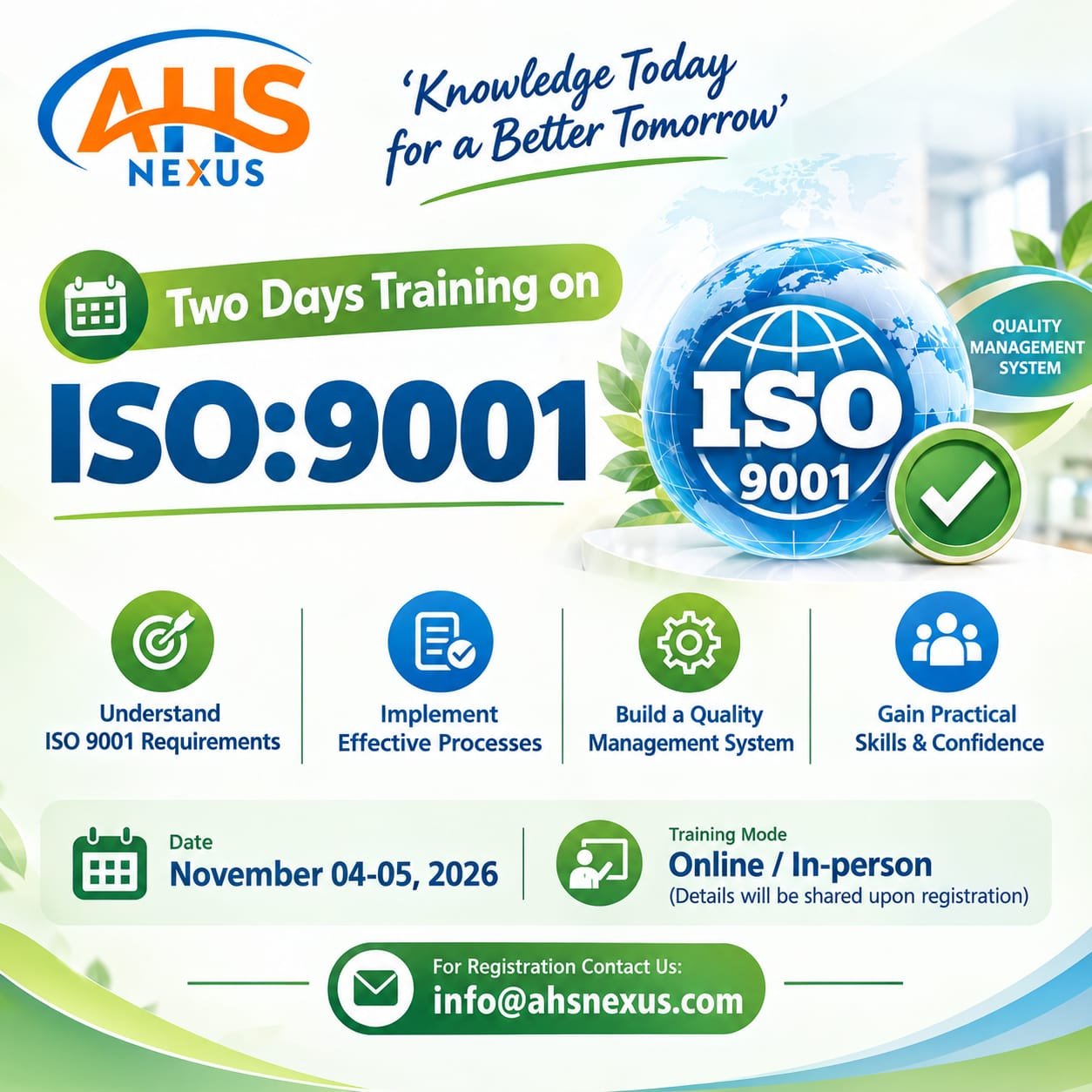
• October 15, 2026 (04:00 PM PKT): Join our Free Global Halal Webinar (90 mins), featuring an Ex-BPJPH Assessor to break down real-world SFDA consignment approval workflows live on Zoom. • November 04–05, 2026: Enroll in our intensive Two-Day Specialized Online Training on OIC/SMIIC 1:2019 Requirements & Implementation to receive customizable SFDA consignment templates, MoIAT/ESMA application roadmaps, and supplier audit checklists.
Register Free Webinar Oct 15 / Join Masterclass: https://www.ahsnexus.com/training-series/oic-smiic-halal-training
P.S. — Dealing with a recent rejection letter or customs query from SFDA? Contact the AHS Nexus advisory desk at info@ahsnexus.com or WhatsApp +92 303 060 8888. We provide complimentary compliance reviews for the first 10 brands this week.